Chapter 2
Stuck Thoughts
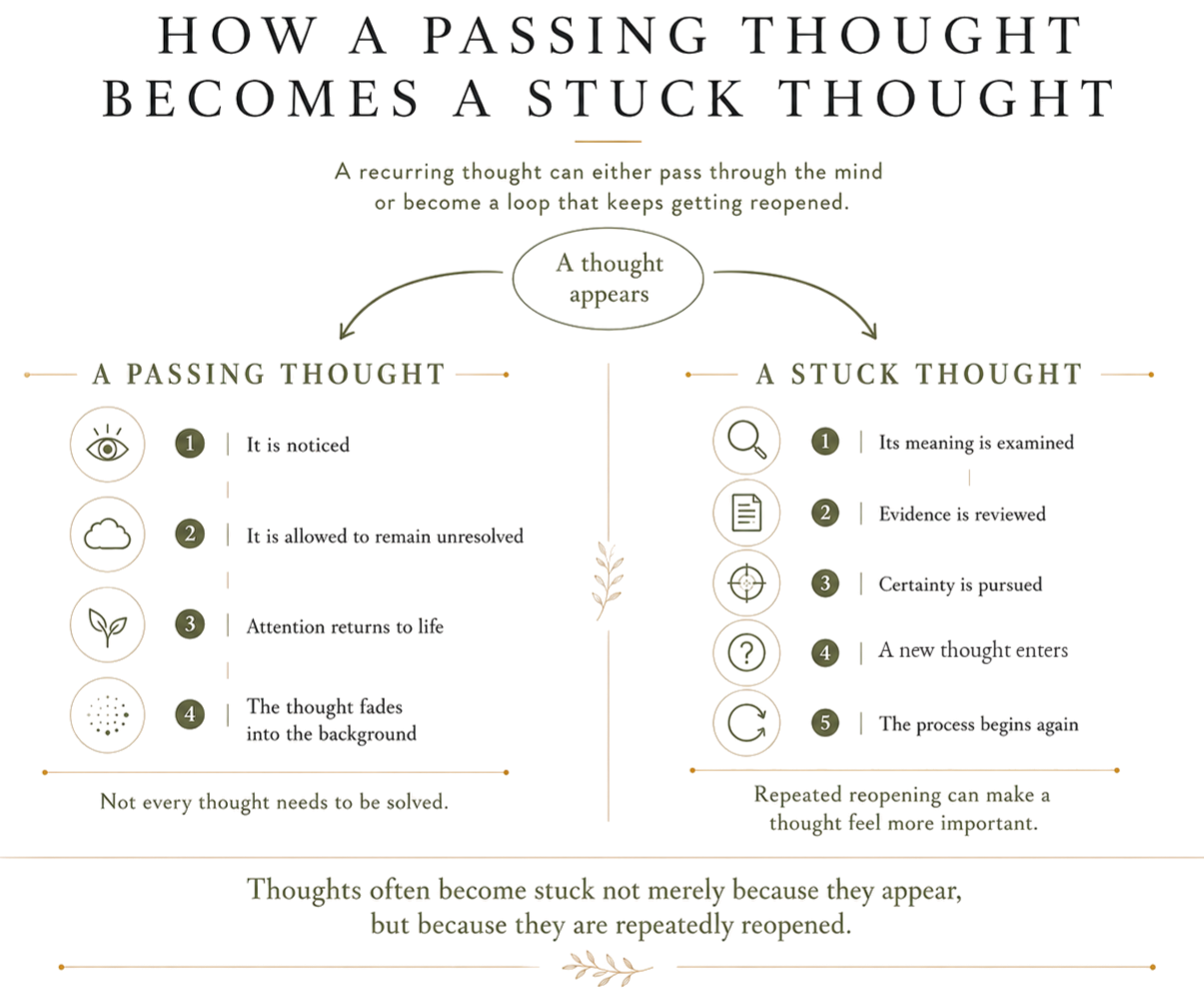
A recurring thought can either pass through the mind or become a loop that keeps getting, over and over again, reopened.

Does this feel familiar?
A thought returns even after you feel like you’ve answered it.
You replay conversations, memories, feelings, or details to make sure you did not miss something.
You feel close to certainty but then a new ‘what if’ enters in.
You tell yourself, “I just need to think about it one more time.”
Everything fades into the background as you get tunnel vision on the question.
You feel like you can’t move forward until you have a better level of closure.
Resources
Understand why certain thoughts feel so important, why they keep returning and how the search for relief can quietly continue the cycle.




What’s Next?
Chapter 3 : responding differently
Learn how to respond to intrusive thoughts without feeding the cycle, make room for uncertainty, and return your attention to the life, relationships, and responsibilities in front of you.